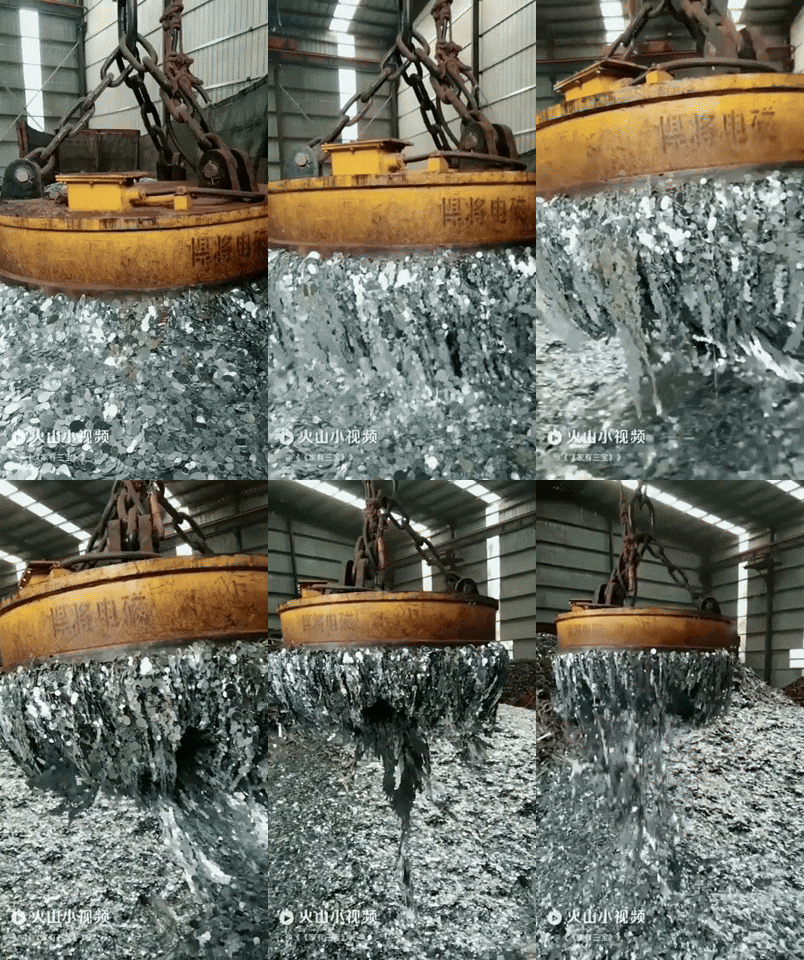
As a kid, I loved playing with magnets. Most of mine came out of broken toys. In school I learned Faraday’s law and Gauss’s law, and saw how a magnet can make things move when you run electricity through its field. It seemed like magic, and it still does.
Magnets have changed a lot since then. You’ll find them now in toothbrushes, cellphones, and electric cars, and I expect them to show up soon in electric planes and in robots.
How they’re made
The chemistry has changed in recent year on how we make magnets. One of the most powerful everyday magnets now is NdFeB. Another common industrial one is SmCo. The two start out the same way and end the same way; they differ in the middle. And the middle is where each gets its coercivity, the thing that keeps it from being demagnetized.
Both are made from powder. The powder is lined up in a magnetic field, pressed into shape, and fused in a furnace. Air has to be kept out the whole time, because rare-earth alloys react easily and a magnet’s properties depend on its exact composition.
For NdFeB, the furnace is the main thing. It fuses the powder into a nearly solid block and closes the pores that would otherwise let oxygen attack the magnet later. It also keeps the grains from growing too big, because coarse grains kill coercivity.
Here’s why. Inside a magnet, the atoms in each region point the same way, and the boundary between two regions pointing different ways is called a domain wall. You demagnetize a magnet by pushing those walls through it. Each wall that sweeps across flips a whole region.
Grain boundaries stop walls. A wall crossing into the next grain runs into a misaligned crystal and gets stuck. Fine-grained NdFeB gets its grains down to 1–3 micrometers, small enough that the walls can barely move. Reversing the magnet then takes a much stronger opposing field.
SmCo goes a different way. The magnet is heat-treated for about 20 hours at around 850°C and then cooled slowly. That leaves a fine cellular structure inside, and the copper-rich walls between the cells are deliberately placed obstacles.
Picture the domain wall as a heavy tarp dragged across a field. In an ordinary magnet the field is smooth, so one good shove slides the tarp all the way across. In an aged SmCo magnet the field is studded with fence posts, and the tarp snags on every one. To demagnetize the magnet, you’d have to drag the whole tarp over all the posts at once.
That snagging is called pinning, and it’s where SmCo’s resistance comes from. NdFeB takes the opposite approach: instead of posts, it relies on a crystal so stubborn about direction that nothing can rotate it.
NdFeB’s furnace time is measured in hours. So why would anyone run SmCo’s day-long cycles?
The answer is heat. Adding dysprosium or terbium helps NdFeB resist demagnetization, but it still loses its magnetism about 3–4 times faster than SmCo per degree, and even its top grades max out around 250°C. Aerospace, defense, and satellite customers who need steady output from -55°C to 250°C pay for SmCo’s furnace time and its cobalt.
That furnace time has a price. Every SmCo part ties up a furnace far longer, so each furnace turns out less and each kilogram costs more. SmCo has survived as a premium niche for that reason, while NdFeB, with its hours-long, high-volume cycle, dominates the world’s sintered-magnet output.
The finishing businesses split the same way: high volume and thin margins for NdFeB, low volume and higher margins for SmCo. Since China’s April 2025 export controls on samarium, SmCo finishing may be the niche a domestic producer can defend.
Who makes them
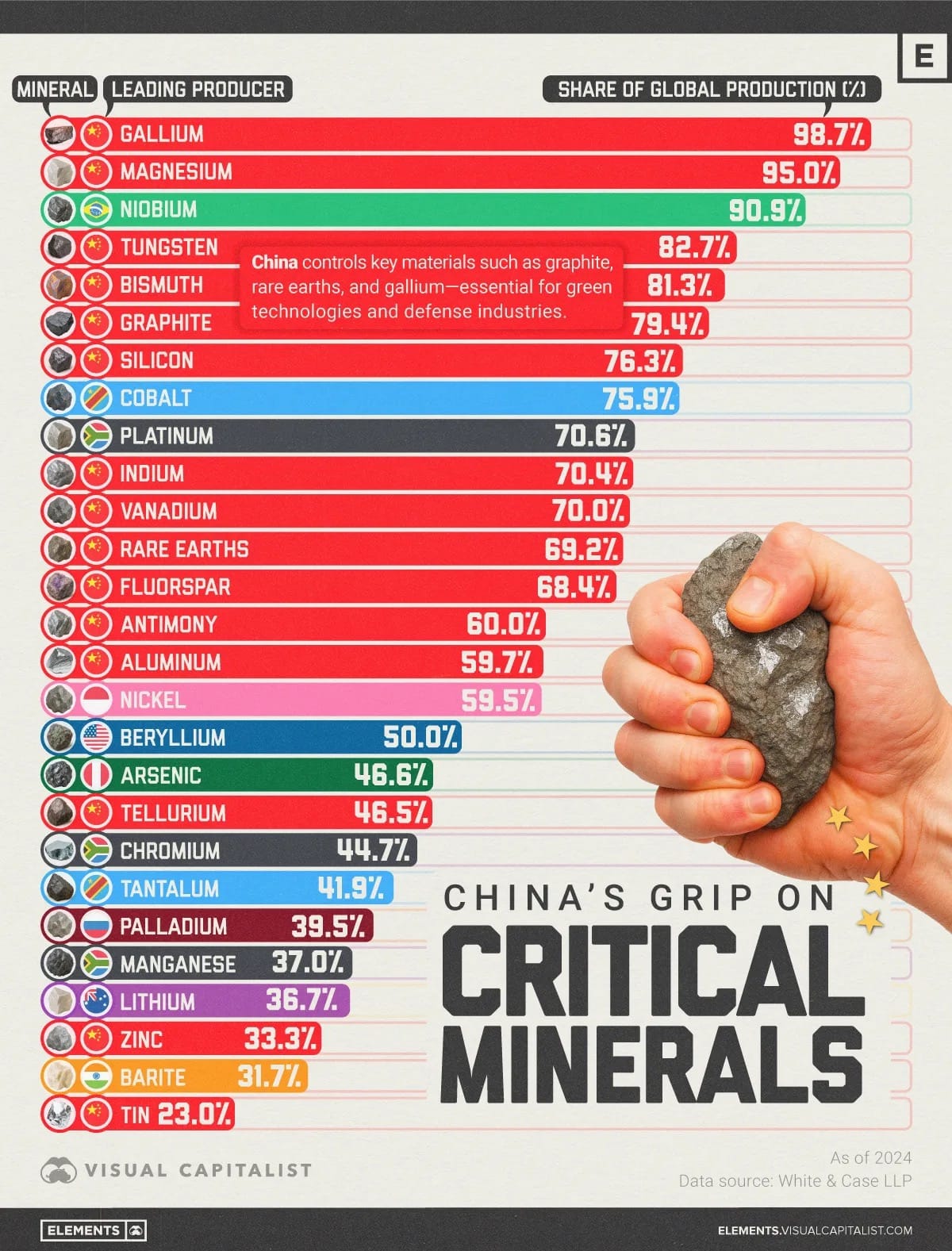
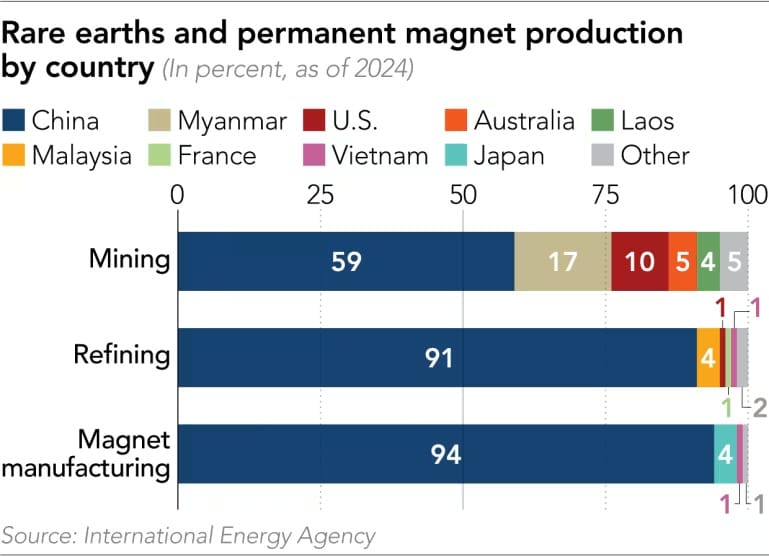
China’s grip on rare earths is tightest in the middle of the supply chain. It does about 60 to 69% of rare-earth mining. From there its share rises, to about 92% of the magnet market and about 95% of metallization, the step that turns oxide into metal.
The gap comes from what each stage takes. Rare-earth ore turns up on every continent, so a lead in mining can be competed away within years. Separation, metallization, and magnet-making take decades of process know-how, scale, and a deep bench of specialists.
China built all of that on purpose, with state subsidies, while its below-cost prices drove Western processors out of business in the 1990s and 2000s. Even ore mined elsewhere has historically gone through China to be processed, and often still does. Opening mines is the fast part of getting out; rebuilding the middle is the slow part.
Samarium is harder to measure, since no reliable public figure exists for China’s share. But no dedicated plant for turning samarium into metal has run outside China since France’s La Rochelle facility closed in 1994. The first new one, in Vietnam, only starts a pilot in December 2026.
The US wants out because one country controls licensing and pricing, and it has used that control. In April 2025, China started requiring export licenses for seven rare earths, including samarium. Western auto plants had to cut output, and European prices climbed to six times China’s. Those controls are still in force. A broader version would reach even products made outside China, if their Chinese rare-earth content is 0.1% or more of their value. It’s suspended, but only until November 10, 2026. The military has the same exposure; an F-35 contains about 920 pounds of rare earths.
Chinese magnets have carried a 25% tariff since January 1, 2026. The Pentagon already bans Chinese-made magnets on its contracts, and on January 1, 2027, the ban extends to the whole chain, from mine to magnet. It has also set a price floor of about $110/kg with MP Materials.
Meanwhile magnets already account for more than 80% of rare-earth demand by value, and that demand is growing faster than supply outside China.
Who can win
For magnet companies, the next one to three years are a real opening. Demand is growing, but most of the opening comes from government policy and from supply outside China that can’t keep up.
Magnet demand for rare earths has doubled since 2015 and is projected to rise about another 30% by 2030. For US companies, though, the January 2027 deadline matters more. That’s when the Pentagon’s ban reaches back to the mine. Its own magnet needs are also projected to triple, to about 10,000 tonnes a year by 2030. That’s close to half of everything made outside China today.
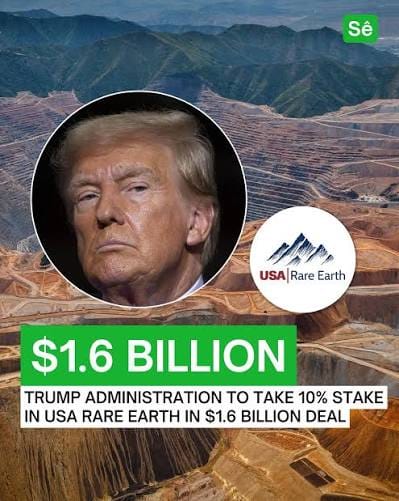
Supply can’t simply grow to meet that, because China’s export controls keep supply outside China bottlenecked through 2026 and 2027. The tightest point is dysprosium and terbium, the additives NdFeB needs to resist demagnetization; more than 99% of both are refined in China. Analysts expect three to four years before capacity elsewhere meaningfully closes the gap. Until then, buyers choose between cheap Chinese material and expensive alternatives, and many of them have to take the compliant one.
The government has also shown it will pay. Its deal with MP Materials included $400 million in equity, a 10-year agreement to buy all of MP’s output, and that $110/kg price floor, roughly double the market price. Qualified domestic suppliers are scarce enough that the government has already handed out sole-source contracts.
That scarcity gives qualified suppliers pricing power over the buyers who have to go compliant. Price benchmarks outside China are expected to stay separate from China’s through 2030. And once a customer qualifies a supplier’s magnet in their motor, switching is costly. That lock-in is what a finishing and assembly shop makes its money from.
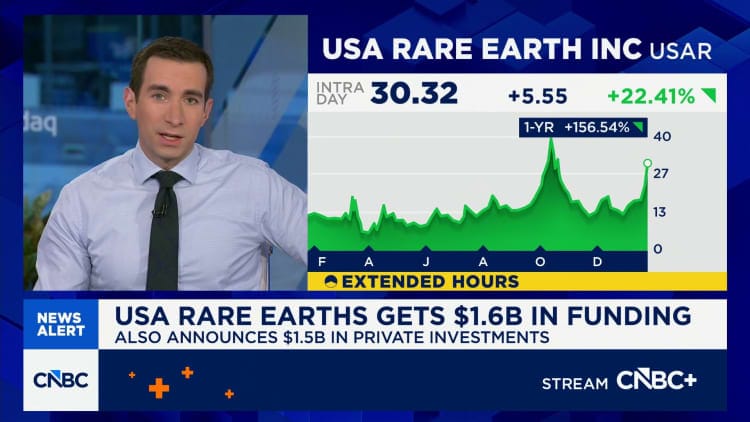
The scarcity may not last that long, though. Announced US capacity, about 40,000 tonnes, already exceeds credible domestic demand of about 17,000, so the window for scarcity pricing may close as new plants come online in 2027 and 2028.
There’s also a compliance trap. Under the 2027 rule, a magnet finished in Texas from a blank that was mined or processed in China still doesn’t qualify, so where the blank comes from is the first thing to check. Recycled NdFeB, on the other hand, counts as compliant if it’s milled and sintered in the US.
And China could change course. If geopolitics ease, it could flood the market again and squeeze margins for everyone except defense-qualified suppliers, who are protected by price floors.
Then there are the robots, which is where I expect magnets to show up in huge numbers. A humanoid robot holds several times more magnetic material than an EV, and Morgan Stanley projects robot sales rising from about 29 million in 2026 toward 1.4 billion by 2050.
If that happens, the thing I used to pull out of broken toys will be inside machines sold by the billion. It still seems like magic to me.